

Risk and Security
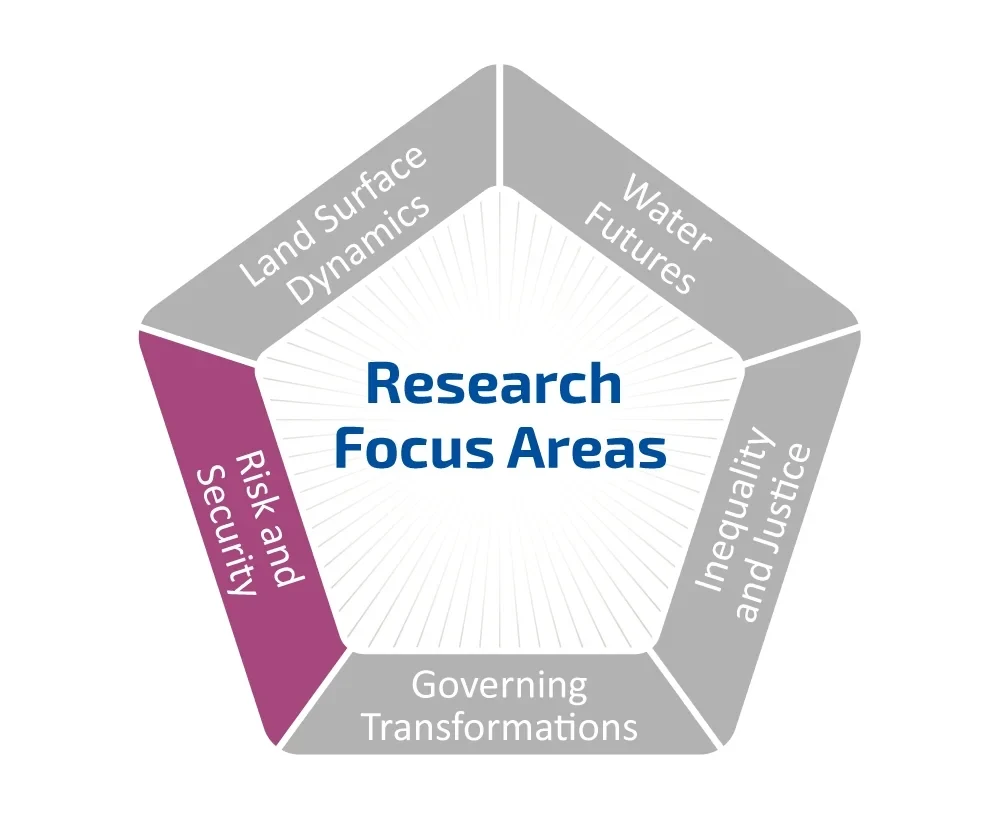
Risk and Security brings together research at the Department of Geography that explores risk, security, and how people and environments experience and respond to hazards. This page introduces the research focus area, highlights the participating research groups, presents ongoing and completed projects, and provides contact information for further exchange and collaboration.
What is studied in the research focus area Risk and Security?
The research focus on Risk and Security is concerned with holistic approaches to risk, interrelated facets of security and critical interrogations of the politics and geographies of (in)security and securitisation. It explores the interplay of hazards, vulnerabilities and exposures in different geographical and socio-cultural contexts as well as the uneven landscapes and experiences of (in)security that result from unequal global-local relations of power. Research in this focus area deals with concepts and solution-orientated aspects of disaster risk reduction, water security, and human security using a sound and complementary mix of quantitative and qualitative methods.
In a world of increasing cascading and systemic risks, aspects of prevention and adapting human security are of particular importance in this challenging and dynamic research focus and are therefore an integral part of our Master's programmes. The research focus also develops critical perspectives on security discourses and policies, considering how the latter impact on and intersect with the experiences and agencies of everyday actors in diverse contexts.
Current research is focusing, for example, on floods (magnitudes, recurrence intervals, designation of floodplains, management strategies), droughts, landslides or permafrost degradation, as well as on social requirements for risk management in spatial planning, associated health risks and pandemics or food security issues. Further topics include migration, militarisation, emotional geographies of security and insecurity, and violence. The research focus Risk and Security contributes to the Transdisciplinary Research Areas Sustainable Futures (TRA6) and Individuals, Institutions and Societies (TRA4) of the University of Bonn.
Involved research groups
- Geomorphology and Environmental Systems (Prof. Dr. Lothar Schrott)
- Cultural Geography (Prof. Dr. Kathrin Hörschelmann)
- Social Geography (Prof. Dr. Nadine Marquardt)
- Development Geography and Environmental Governance (Prof. Dr. Jessica Budds)
- Hydrology (Prof. Dr. Julian Klaus)
- Development Geography (Prof. Dr. Lisa Schipper)
- Georisk Research using Remote Sensing Methods (Prof. Dr. Christian Geiß)
- Economic Geography (Prof. Dr. Britta Klagge)
- Remote Sensing and GIS (Prof. Dr. Zbynek Malenovsky)
Current projects on Risk and Security
- Co-Design of a hydrometeorological information system for sustainable water resources management in southern Africa Co-HYDIM-SA Prof. Dr. Mariele Evers; BMBF, 05/2024 - 06/2027; Partner*innen: Professur Nachwachsende Rohstoffe der Universität Bonn, Prof. Dr. Ralf Pude (Projektleitung), Universität Freiburg, Karodur Wirkteller GmbH
- MisKaRe – Retentionspotenzial von Dauerkulturflächen auf Abflussbildungsprozesse zur Re-duktion von Hochwasserrisiko und Nutzung der Biomasse in regionalen Wertschöpfungsketten Prof. Dr. Mariele Evers; EFRE, 5/2024 - 6/2027; Partner*innen: Professur Nachwachsende Rohstoffe der Universität Bonn, Prof. Dr. Ralf Pude (Projektleitung), Universität Freiburg, Karodur Wirkteller GmbH
- SOZIAHR: Soziale, Ökonomische und Administrative Herausforderungen von Klima-Resilienz Prof. Dr. Kathrin Hörschelmann, Dr. Juliane Dame; TRA Individuen, Institutionen und Gesellschaften (Rheinische Friedrich-Wilhelms-Universität Bonn) im Rahmen der Exzellenzstrategie von Bund und Ländern, 06/2024 – 12/2025; Partner*innen: Jun.-Prof. Dr. Jacqueline Lorenzen (Umweltrecht), Jun.-Prof. Dr. Svenja Hippel (Rechtsökonomik), Jun.-Prof. Dr. Julia Mink (Umweltökonomik), Jun.-Prof. Hanna Schwank Ph.D. (Mikroökonomik)
- GreenBalance - Positive und negative Gesundheitswirkungen der städtischen Biodiversität Dr. rer. nat. Timo Falkenberg, Prof. Dr. med. Thomas Kistemann; BMBF (FONA), 10/2022 – 02/2028
- MoNette - Bewertung und Optimierung der Erweiterung der Kläranlage Nette für die (multi)-resistente Keim-, Mikroplastik und Spurenstoffreduzierung Prof. Dr. Thomas Kistemann, Dr. Nicole Zacharias; Ministerium für Umwelt, Landwirtschaft, Natur- und Verbraucherschutz NRW, 10/2022 – 03/2025; Partner*innen: Niersverband / Institut für Siedlungswasserwirtschaft der RWTH Aachen
- Spaceborne Earth Observation Applications for Emergency Response and Disaster Risk Reduction 2 [SPEAR II] Prof. Dr. Klaus Greve, Prof. Dr. Christian Geiß; DLR u. UN-SPIDER, 7/2024 – 6/2029; Partner*innen: DLR, UN-SPIDER, UNOOSA
- CloudComputing4EO: PD Dr. Michael Schmidt; Urbetho CD GmbH, 6/2024 – 5/2025; Partner*innen: Urbetho CD GmbH
- EUMA - Creating an EUropean Higher Education Network for MAster’s Programmes in Disaster Risk Management Prof. Dr. Lothar Schrott; European Union’s Union Civil Protection Mechanism (UCPM) Research and Innovation Programme, 1/2024 – 12/2025; Partner*innen: Thomas Glade (Universität Wien), Cees van Westen (Twente University), Emanuele Somario (Scuola Superiore Sant´ Anna Pisa), Caroline McMullan (Dublin City University), Aurelia Bony-Dandrieux (IMT Min Alès), Tauno Suurkivi (EASS - Academy of Security Sciences, Tallinn)
-
EcoWat-Secure: Ecohydrological modeling in a data scare West Africa Sudanian watershed: Integrating agricultural dam-operation for water security predictions Prof. Dr. Julian Klaus; Argelander Scholarships for doctoral candidates from universities in Africa, Latin America and South/ East Asia (University of Bonn), 2025
-
SFB/TRR 228 - Future Rural Africa. Future-making and social-ecological transformation Prof. Dr. Detlef Müller-Mahn; DFG, seit 2018; Partner*innen: Universität zu Köln, Bonn International Center for Conversion (BICC), das German Institute for Development and Sustainability (IDOS), Universität Potsdam, Charité an der Humboldt-Universität in Berlin
Contact
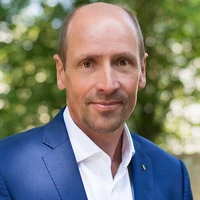
Prof. Dr. Lothar Schrott
0.028 (153)
Meckenheimer Allee 166
53115 Bonn
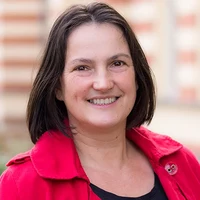
Prof. Dr. Kathrin Hörschelmann
1.004 (213)
Meckenheimer Allee 166
53115 Bonn