

Fire-Stream: Insights into Wildfire Effects on Streamflow Generation and Water Quality
Wildfires have increased in frequency and intensity in many parts of the world. One especially affected region is the Western United States where forested area burned by wildfires annually has increased six-fold since the 1980s. This sparks concern over the impact these fires potentially have on water resources.

About Fire-Stream:
In response to the 2023 Lookout Fire at the HJ Andrews, this Volkswagen Foundation-funded project was initiated in 2024 to investigate the hydrological consequences of wildfires.
- Objective: Examining how wildfires may alter runoff generation, water balance and water quality in forested catchments.
- Study Site: The HJ Andrews Experimental Forest (Oregon, USA), following the 2023 Lookout Fire.
- Methodology:
- Comparing burned vs. unburned areas and pre- vs. post-fire conditions.
- Extensive sampling of streams and precipitation over a two-year period.
- Integrating data into hydrological models to track changes in water sources and flow-paths.
- Team: Joint Research with Watershed Processes Lab at Oregon State University (Prof. Catalina Segura).


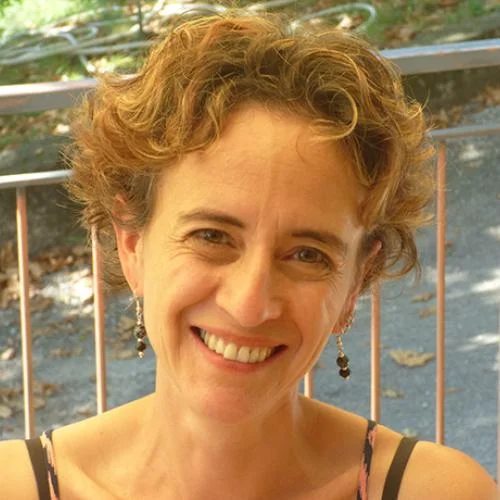

Julian Klaus is a Professor of Geography in Bonn with expertise in catchment hydrology, hydrological modelling, and isotope methods. He is the project's Principal Investigator.
Catalina Segura is a Professor of Hydrology in the College of Forestry at OSU with expertise in geomorphology and runoff generation in headwater streams as the project's Co-Principal Investigator
Lutz Klein is focusing his PhD on investigating the impact wildfire has on base flow sources as well as transit times on a catchment scale. He can build on his previous work in isotope and forest hydrology as well as transit time modeling.
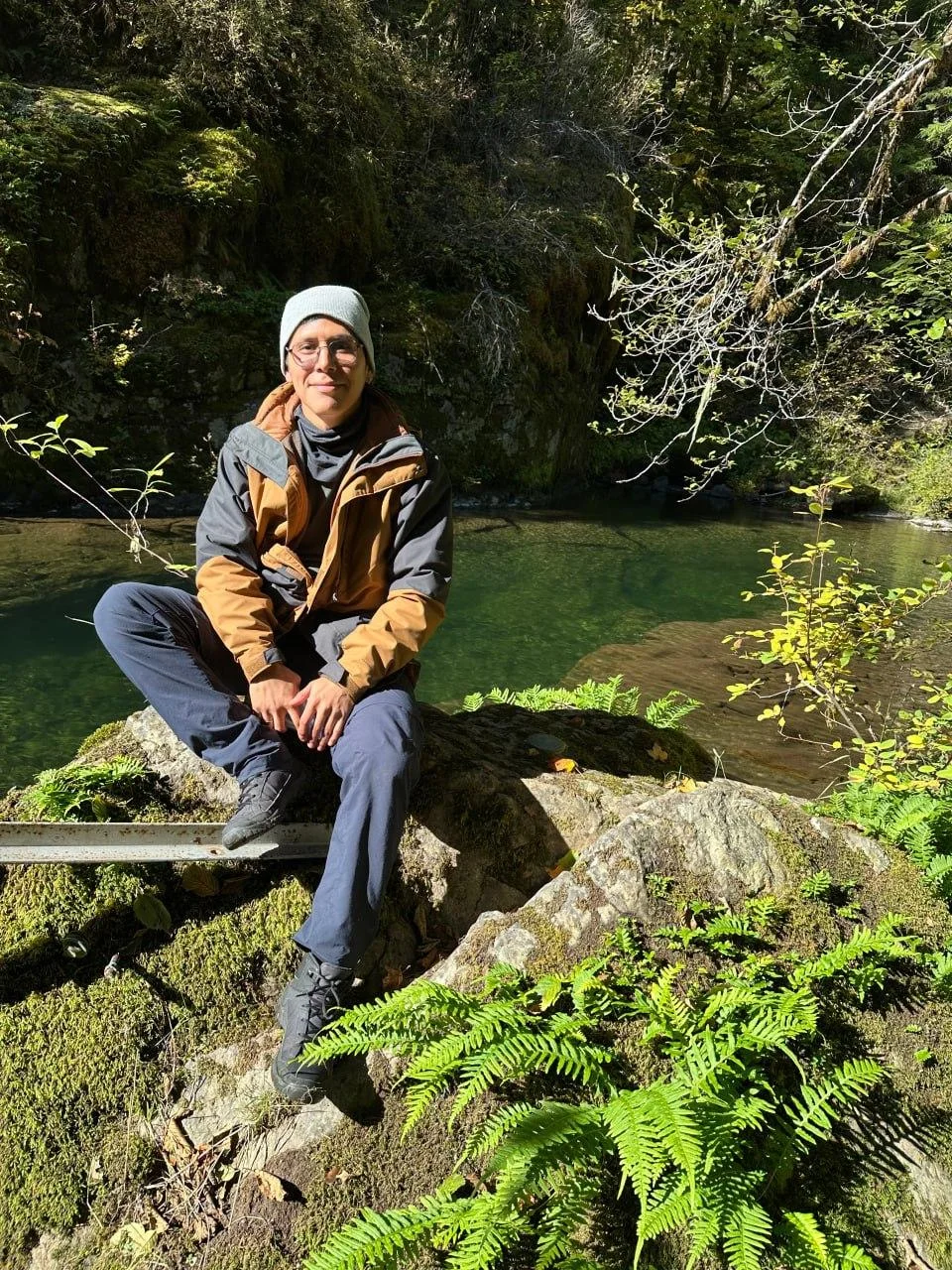
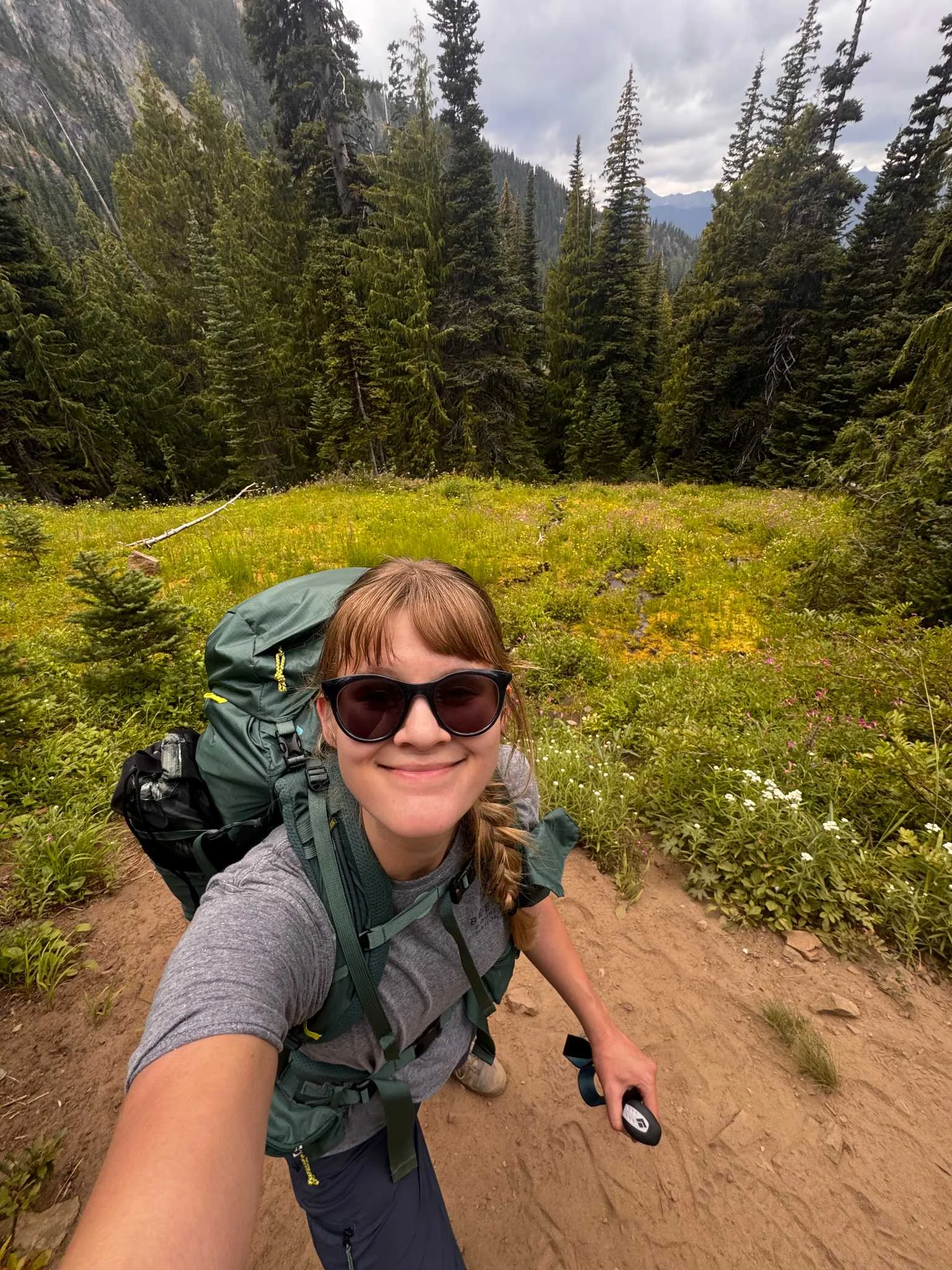
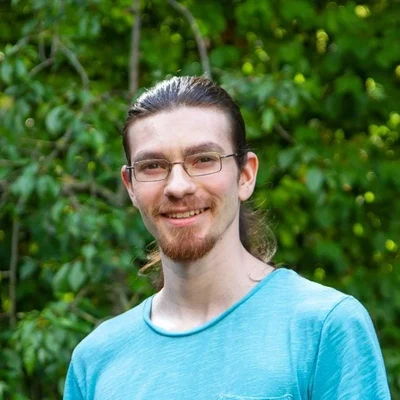
Stalin Guaman focuses his PhD research on understanding how wildfires alter hydrological processes using environmental tracers. He brings strong expertise in handling and interpreting tracer data, developed through academic training and research work at the University of Cuenca.
Maeve Bittle's research project focuses on understanding the effects of wildfire on instream nutrient dynamics using unique pre- and post-fire water quality sample data. She graduated from the University of Iowa in 2021 with a B.S.E. in Environmental Engineering.
Fabian Kiefer works as a Student Assistant at the Department of Geography (University of Bonn), with a focus on data processing and visualization.
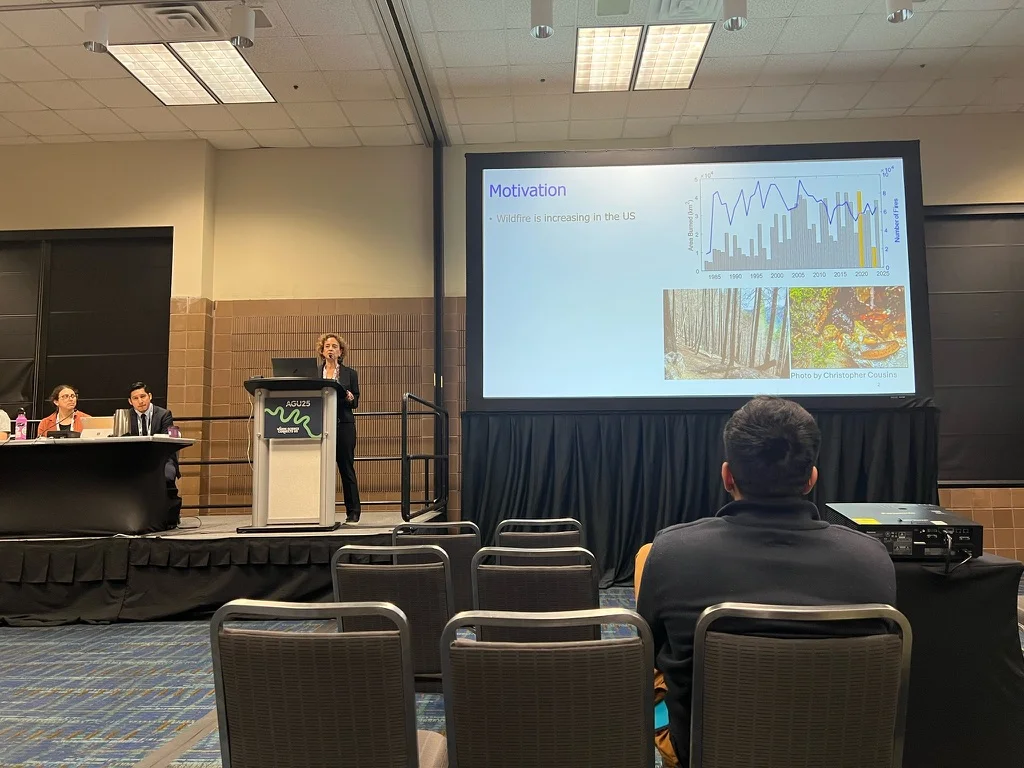
December 2025: Catalina presenting at AGU 2025 in New Orleans: Post-Fire Water in Focus
In December 2025, Catalina gave an invited talk at AGU with the newest Fire-stream results on “Hydro-Isotopic Evidence for Landscape-Mediated Buffering of Wildfire Effects on Baseflow and Subsurface Flow Dynamics”. She shared the teams’ findings on the spatial variability in water isotope ratios across the HJ Andrews before and after the fire. Catalina highlighting the increased post‑fire variability that may be attributed to either shorter transit times or wetter conditions post fire. Hypotheses that will be tested in 2026.
First Fire-stream thesis submitted!
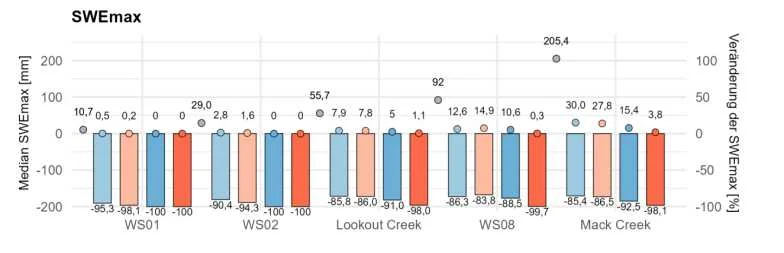
Lillian Kupfer’s Master thesis uses hydrological modelling and climate projections to show how warming temperatures at HJ Andrews reduce snow accumulation and increase rainfall, altering the seasonal water balance. These changes lead to earlier summer drying, lower streamflow, and an elevated wildfire risk, highlighting the tight coupling between climate, water, and fire in mountain landscapes.
Summer 2025: Staying Ahead of the Fire Season
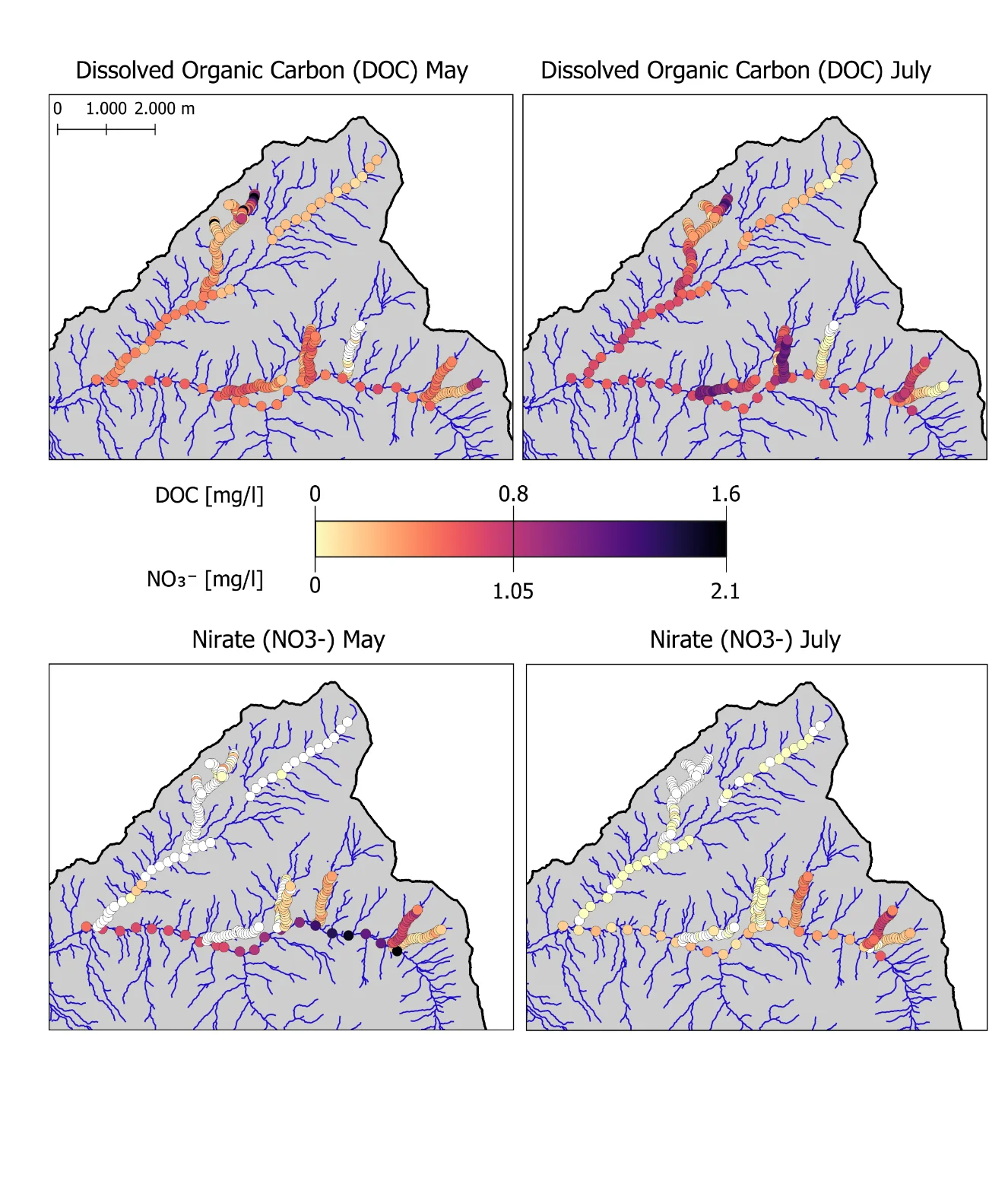
In mid-July, the Fire-Stream team was back in the field at HJ Andrews, sampling streams ahead of Oregon’s main wildfire season to avoid the bad luck of last summer. We returned to the same streams sampled in May, now flowing over much shorter sections, with some channels partially drying out as summer conditions intensified. High-frequency sampling continued, allowing us to track how post-fire water dynamics evolved from spring into summer. At the same time, sample processing and analysis progressed, steadily expanding our unique pre- and post-fire dataset.
The Fire-stream team at OSU is growing
With the start of the 2025 academic year at OSU, we recruited two students Maeve Bittle (Masters) and Stalin Guamen (PhD) working on different Fire-stream questions. Stalin was awarded the Provost's Distinguished Graduate Fellowship at OSU for his project. Stay tuned on the results!
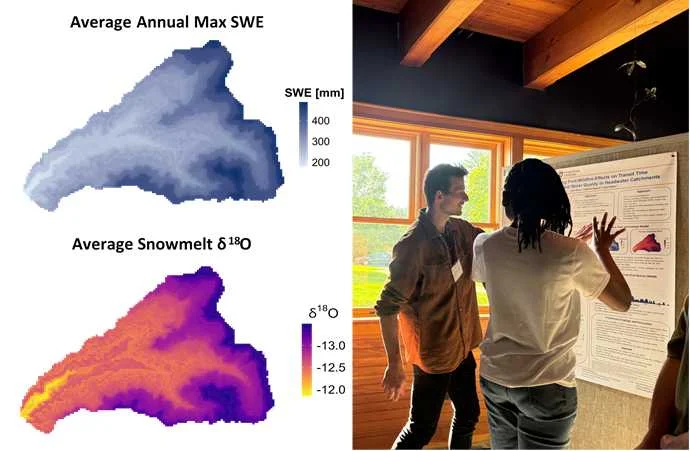
June 2025: The Fire-stream team at the Gordon Conference on Catchment Science
Catalina and Lutz attended the Gordon Research Conference on Catchment Science in Andover, New Hampshire. Lutz presented the latest progress of Fire-Stream, showcasing his newly developed snow water equivalent – snow isotope model implemented for the HJ Andrews Experimental Forest. Alongside first results from the post-fire synoptic water sampling, the presentation highlighted spatial patterns of snowmelt isotopes and emerging post-fire changes in water quality. Discussions with peers provided valuable feedback and inspiration for the next phase of Fire-Stream.
Spring 2025 - finally synoptic sampling
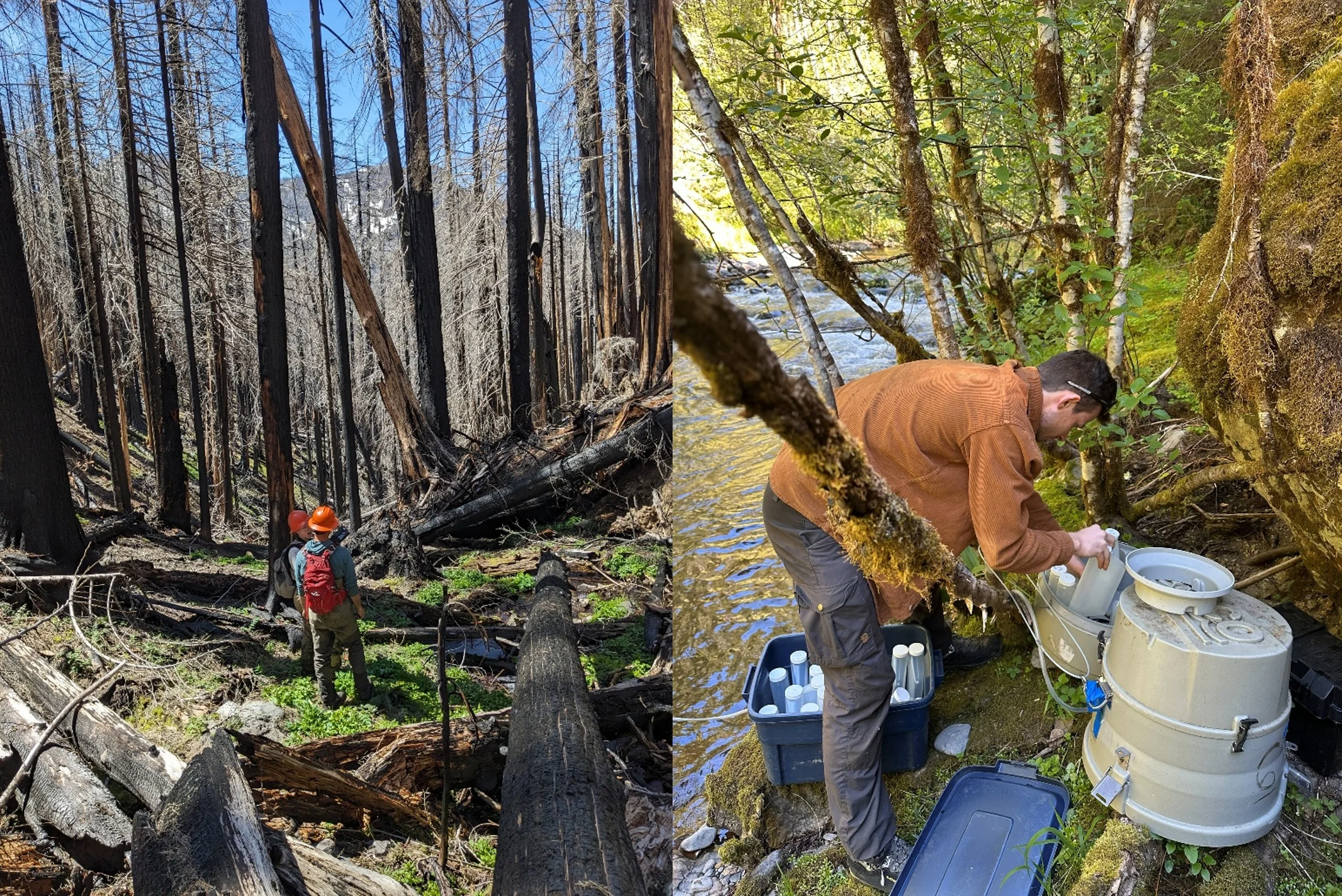
After the Ore Fire and winter, sampling and measurements ramped up in May 2025. Lutz and the Watershed Processes Lab team at OSU conducted the first post-fire synoptic campaign, collecting over 800 samples from 12 streams, hiking along the streams for a total of 26 km through rugged terrain. Six automatic water samplers and one high-frequency precipitation sampler were installed across the HJA. In addition to fieldwork, Lutz began isotope analyses and collaborated with the OSU team on data processing. In addition, Lille Kupfer started her master thesis on hydrological modelling at the HJA.
Fall 2024: On-Site Collaboration at OSU
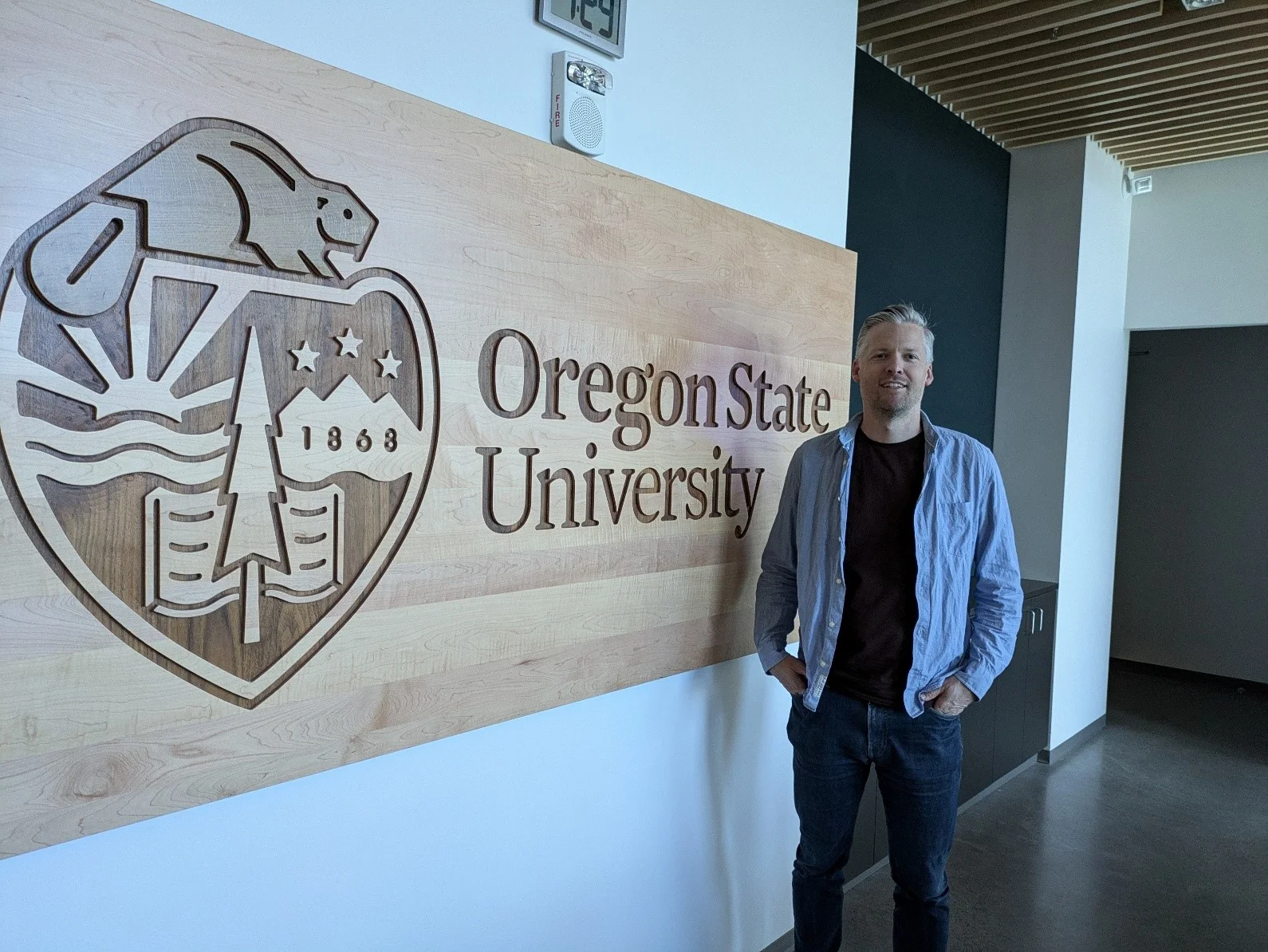
Julian visited the team at Oregon State University to work closely with Catalina on reviewing data, reflecting on fieldwork progress, and exchanging insights with other researchers on HJA projects. The visit was timed to coincide with the week when the principal investigators of the HJ Andrews LTER met, allowing direct engagement with the leadership team. Julian also gave a seminar on catchment hydrology and interacted with various OSU graduate students. Access to HJA remained limited, so additional field visits beyond the sampling crew were forgone.
Summer 2024: First intense field campaign and a new fire that disrupts plans
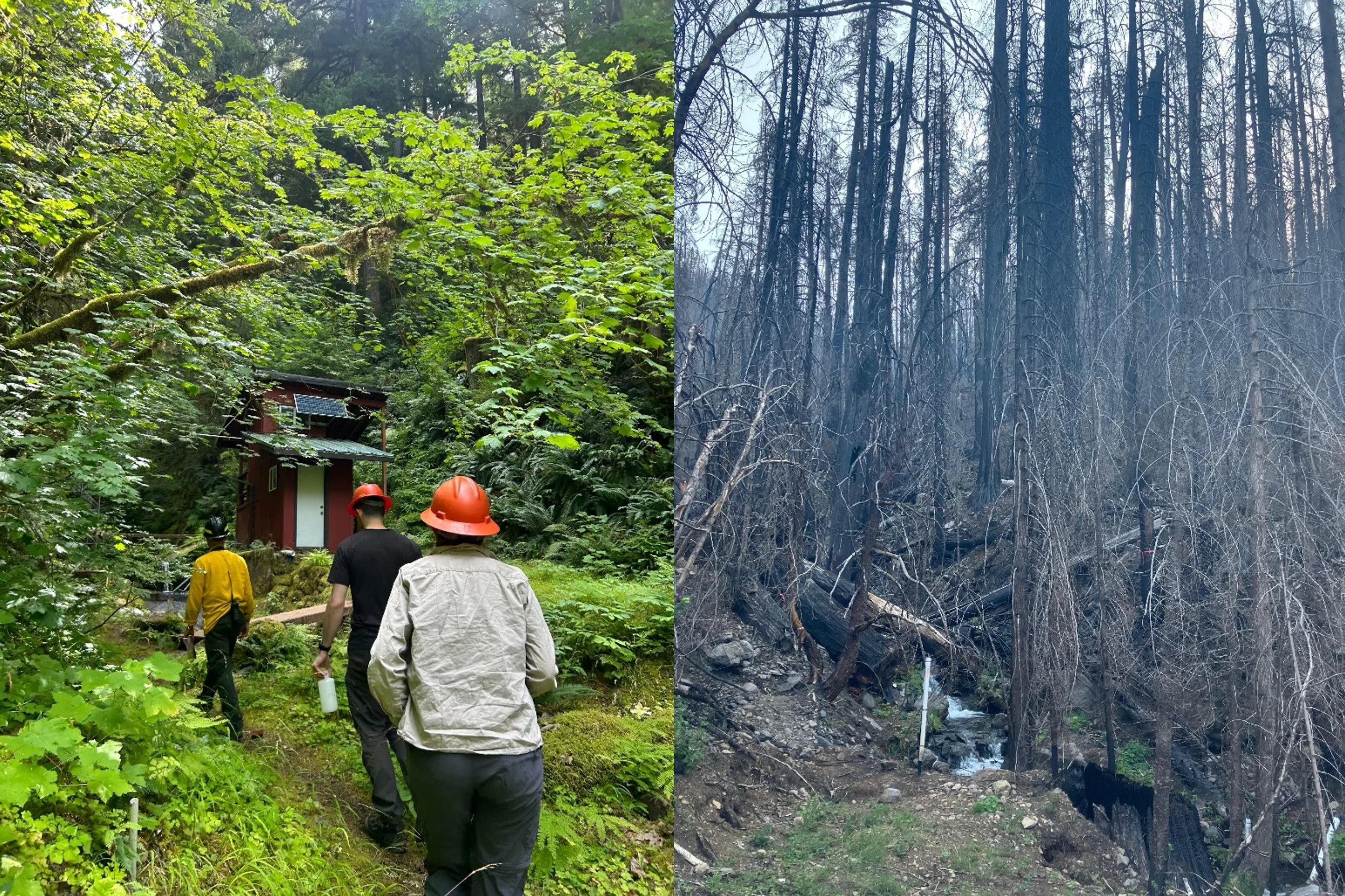
Lutz travelled to Oregon for the first post-fire synoptic water sampling campaign across HJA streams under low-flow conditions. In mid-July, the Ore Fire ignited just north of the HJA, temporarily disrupting our plans. By September, weekly sampling resumed as the fire was gradually contained (Ore Fire time line) allowing Lutz to collect data and directly observe the post-fire landscape. We adapted our strategy and reorganized the timing of synoptic campaigns for spring and summer 2025.
Project Launch – May 2024: Start of our sampling campaigns
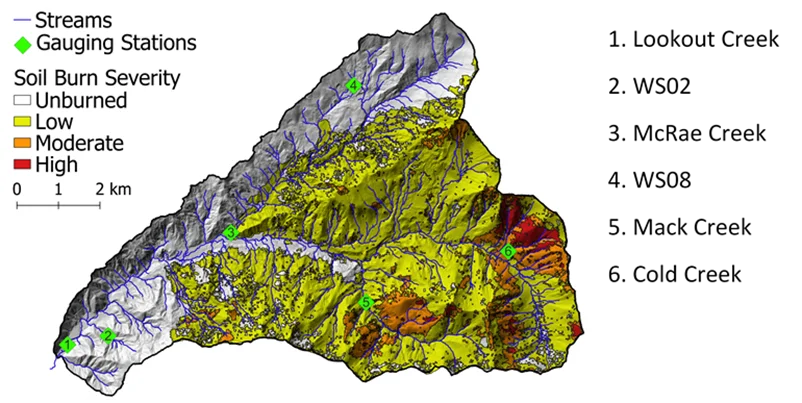
With the project kick-off, Lutz Klein started his PhD at the University of Bonn and continuous as well as synoptic sampling at the HJ. Andrews started. The project team at Oregon State University conducts ~weekly sampling at six selected streams for stable water isotopes, dissolved organic carbon (DOC), nitrate, and major ions. We selected the streams to capture the full range of wildfire impact across catchments, as well as the diverse environmental conditions present throughout the HJA.[J1] Precipitation is also sampled weekly from two stations at different elevations and analysed for stable water isotopes and major ions.
The data collected within the project is supplemented by continuous meteorological measurements (e.g., air temperature, precipitation, wind speed and direction, snow water equivalent) from eight climate stations throughout the HJA. Additionally, streamflow is measured through a network of gauging stations.

Prof. Dr. Julian Klaus
3.009
Meckenheimer Allee 172
53115 Bonn

Lutz Klein
3.012
Meckenheimer Allee 172
53115 Bonn

Fabian Kiefer
3.012
Meckenheimer Allee 172
53115 Bonn