

Current research
Here you find more information on current research projects and publications by the various working groups in the Department of Geography.
Research Focus Areas
The department’s research focus areas shape both its projects and its teaching. They bring together the expertise of the working groups and address cross-disciplinary questions that require inter- and transdisciplinary collaboration. Researchers at the GIUB work jointly across groups on projects that tackle major global challenges at the interface of physical and human geography, in close cooperation with partners at the University of Bonn and beyond.

Selected Research Projects

CRC/TRR 228 - Future Rural Africa
Against the backdrop of advancing globalization and the growing impacts of climate change, the Collaborative Research Centre/Transregio 228 “Future Rural Africa. Future-making and social-ecological transformation” investigates how the future in rural Africa is negotiated and shaped. At the centre are processes of agricultural intensification, infrastructure development—such as roads, dams or geothermal power plants—and the expansion of conservation areas. The CRC examines how these often opposing yet closely intertwined developments affect food security, social systems and value chains. The researchers analyse how different ideas of the future shape changes in land use, and how unpredictable events—such as droughts, violent conflicts or political crises—challenge the planning of future developments. The regional focus of the research lies in eastern and southern Africa.
The CRC/Transregio 228 is funded by the German Research Foundation (DFG) and is currently in its third funding period. It is carried out at the University of Bonn in cooperation with the University of Cologne. Other members of this joint project are the Bonn International Center for Conversion (BICC), the German Institute for Development and Sustainability (IDOS), the University of Potsdam, the Charité at Humboldt University in Berlin, as well as numerous cooperation partners in Africa.
Fire-Stream: Insights into Wildfire Effects on Streamflow Generation and Water Quality
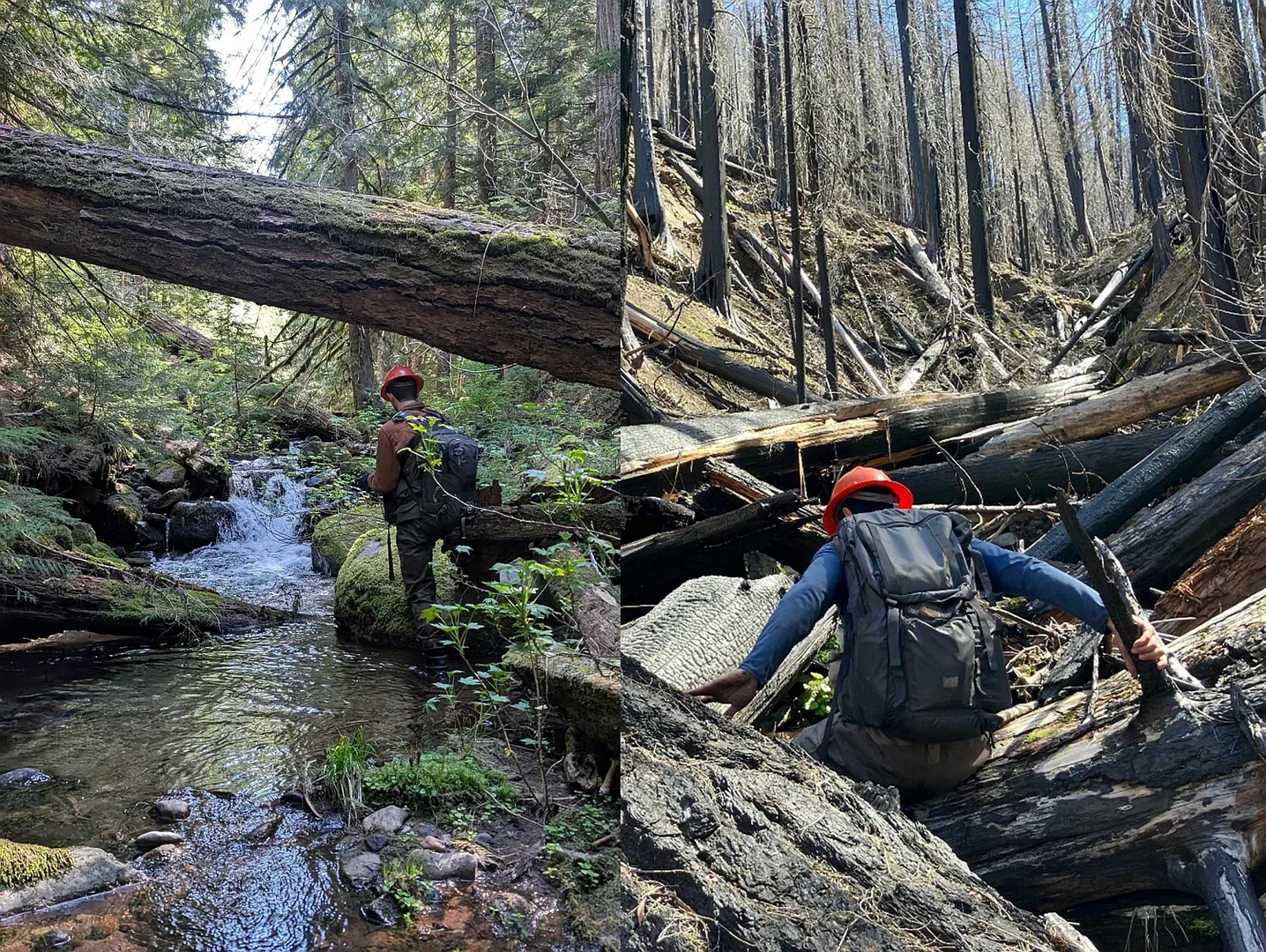
Wildfires have increased in frequency and intensity in many parts of the world. One especially affected region is the Western United States where forested area burned by wildfires annually has increased six-fold since the 1980s. This sparks concern over the impact these fires potentially have on water resources. In the Fire-Stream project, funded by the Volkswagen Foundation, we investigate how wildfires affect hydrological processes and water quality. To achieve this, we build on the 2023 Lookout Fire in the HJ Andrews Experimental Forest in Oregon, USA. The HJ Andrews Experimental Forest (~64 km²) is one of the world’s longest monitored hydrological and ecological research sites and about 2/3 of the area was burned (forest and soil) to various degrees. The research is conducted in cooperation with Prof. Catalina Segura of the Watershed Processes Lab of Oregon State University in Corvallis, Oregon.
Watersheds within the forest burned at varying intensities and some remained untouched by the wildfire. This enables us to not only compare pre- to post-fire conditions but also burned to unburned areas. Now, over a two-year period, we are conducting extensive sampling of streams and precipitation across the forest. By integrating the collected data into various hydrological models, we can investigate how sources and flow-paths of water have changed following the fire. Linking these results to the hydro-chemical parameters that we collect will provide us with critical insights for predicting how future wildfires may alter water supply and quality in forested catchments.
SOZIAHR („Soziale, Ökonomische und Administrative Herausforderungen von Klima-Resilienz“)
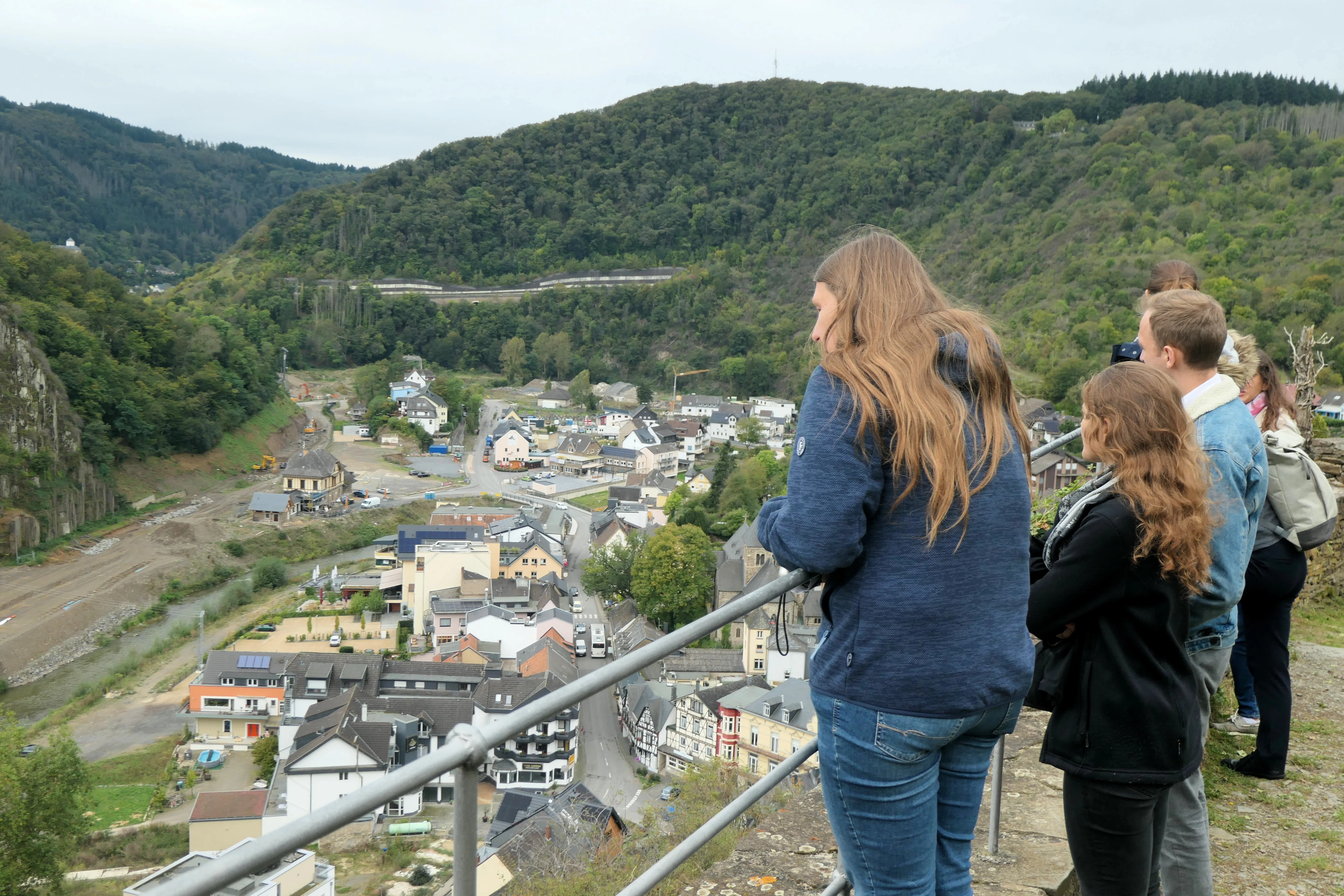
The Mercator-funded research project SOZIAHR (“Social, Economic, and Administrative Challenges of Climate Resilience”) examines the Ahr Valley flood disaster of July 14, 2021, from a social science perspective and develops empirically grounded policy recommendations.
Until the end of 2028, an interdisciplinary team at the University of Bonn, in cooperation with the Wuppertal Institute, will analyze existing regulations and administrative processes in private reconstruction, as well as key conditions for social cohesion, the preservation of democracy, and the implementation of climate mitigation and adaptation measures.
The project aims to provide policy-relevant data and case-specific solutions for the Ahr Valley, while also deriving general recommendations for other regions.
Current publications
Monographs
McCormick, K., B. Kiss, Y. V. Palgan, H. Bulkeley, M. Davis, R. Raven, A. Luque-Ayala and K. Hörschelmann (2024). Urban Nature: New Directions for City Futures. Cambridge University Press.
Nauheim, T. (2025). Ein Geograph in Japan. Praktiken der Forschungsreise Johannes Justus Reins. Colloquium Geographicum 40. Ferger: Bergisch Gladbach.
Journal Articles
Antoni, J., Dame, J., Lobeck, M. and K. Hörschelmann (2025). Mit Partizipation zur Klimaneutralität? Das kooperative Beteiligungsverfahren ,,Bonn4Future - Wir fürs Klima". Standort, 1-12.
Bendig J., Malenovský Z., Siegmann B., Krämer J. and U. Rascher (2025). Comparing methods for solar-induced fluorescence efficiency estimation using radiative transfer modelling and airborne diurnal measurements of barley crops. Remote Sensing of Environment, 317,114521.
Bork-Hüffer, T., Everts, J. and C. Butsch (2025). Uneven Geographies of COVID‐19 II: Spatialities and Economic Geographies in a Syndemic. Geography Compass, 19 (4).
Butsch, C. (2025). Die Sustainable Development Goals – eine globale Agenda für nachhaltige Entwicklung. Geographische Rundschau, 77 (3), 4–8.
Butsch, C., Everts, J. and T. Bork-Hüffer (2024). Uneven geographies of COVID-19: Reviewing geographical research agendas and concepts from a syndemics perspective. Geography Compass, 18 (6).
Gailing, L. and M. Naumann (2025). Aktuelle Herausforderungen der Raumordnung. Praxis Geographie, 4/2025, 4-11.
Greiner, C. and B. Klagge (2024). The temporalities and externalities of ancillary infrastructure in large-scale renewable energy projects: Insights from the rural periphery. Energy Policy, 193, 114303.
Hertig, E. and C. Butsch (2024). Planetare Gesundheit – menschliche Gesundheit und das Erdsystem. Geographische Rundschau, 76(9), 4-7.
Hobbs, M. and L. Pasch (2024). Die räumliche Produktion von Alternsbildern durch Smart-Home-Technologien. Geographica Helvetica, 79(2), 177-189.
Hobbs, M., Lentz, J. M., Meyer-Habighorst, C. and L. Pasch (2024). Warum wir mit einer Care-Perspektive auf Technologien und Digitalisierung schauen sollten. Feministische Geo-Rundmail, 97, 4-10.
Hörschelmann, K. (2025). Commentary: Mind the gap: Citizenship, militarization and the agencies of children. Critical Studies on Security.
Huizinga, R. P., P. Hopkins, M. C. Benwell, M. De Backer, R. Finlay, K. Hörschelmann, Kirndörfer, E. and I. van Liempt (2025). Ethical and Methodological Considerations in Research with Asylum-Seeking and Refugee Youth in European Cities. Social Sciences, 14(4), 204.
Klagge, B. and B. Walker (2024). Grüne Wasserstoffwirtschaft in Namibia und die Wasserstoffpartnerschaft mit Namibia. Geographische Rundschau, 76(4), 38-43.
Klagge, B., Walker, B., Kalvelage, L. and C. Greiner (2025). Governance of future-making: Green hydrogen in Namibia and South Africa. Geoforum, 161, 104244.
Klumparendt, J. and E. Nöthen (2025). Energiewende und Klimaziele 2023. Raumbezogene Kommunikation durch die Erstellung eines (Video-)Podcasts üben. Praxis Geographie, 12, 42-47.
Köhler, T., Schoch-Baumann, A., Bell, R., Buckel, J., Ortiz, D. A., Trombotto Liaudat, D. and L. Schrott (2025). Expanding cryospheric landform inventories – quantitative approaches for underestimated periglacial block- and talus slopes in the Dry Andes of Argentina. Frontiers in Earth Science.
Kraas, F., Follmann, A. and C. Butsch (2025). Urbanisierung und regionale Disparitäten in Indien. Büger & Staat, 74(3/4), 264 – 272.
Kraas, F. and C. Butsch (2024). Kolkata: Kolonialhauptstadt, Wirtschaftszentrum und Kulturmetropole. Geographische Rundschau, 76(12), 28-33.
Last, A. (2025). The ‘creative thesis’ in the academic ‘anxiety machine’. Area (London 1969). [Online]
Lefebvre, A., Bosch, R., Burrows, K., Giaime, M., Goodwin, G., Lai, L. S.-H., Stammler, M. and R. Fernández (2025). Geomorphica: The most accessible journal for the geomorphology community. Geomorphica, 1(1), 1-9.
Liu W., Mõttus M., Malenovský Z., Shi S., Alonso L., Atherton J. and A. Porcar-Castell (2025). An in situ approach for validation of canopy chlorophyll fluorescence radiative transfer models using the full emission spectrum. Remote Sensing of Environment, 316, 114490.
Mehren, R., Altmayer, J., Brockmüller, S., Felzmann, D., Gryl, I., Hemmer, M., Hoffmann, K.-W., Lindau, A.-K., Nöthen, E., Wardenga, E. and C. Wittlich (2024). Auf dem Weg zu Bildungsstandards im Fach Geographie für die Allgemeine Hochschulreife. Der Erdkundelehrer. Verbandszeitschrift der Erdkundelehrerinnen und Erdkundelehrer des Saarlandes im VDSG, 45, 4–7.
Mehren, R., Altmayer, J., Brockmüller, S., Felzmann, D., Gryl, I., Hemmer, M., Hoffmann, K.-W., Lindau, A.-K., Nöthen, E., Wardenga, E. and C. Wittlich (2024). Die neuen Bildungsstandards Geographie für die Sekundarstufe II. Einblicke in die Überlegungen bei der Entwicklung anhand von 20 Fragen & Antworten. https://jimdo-storage.global.ssl.fastly.net/file/ed93b07d-1e46-4186-96fd-846979f88327/B%20SII%20Geographie%20-%20Begleitdokument.pdf
Naumann, M., Becker, S. and A. Bruns (2025). Peripherien, Konflikte, Transformationen – Perspektiven einer kritischen Energiegeographie. Geographica Helvetica, 80(2), 99-107.
Ndi, F (2024). Land acquisition, renewable energy development, and livelihood transformation in rural Kenya: The case of the Kipeto wind energy project. Energy Research & Social Science, 112.
Ndi, F. A (2024). Justice concerns in large-scale renewable energy projects: a case study echoing the importance of procedural justice in wind energy development in Kenya. Energy, Sustainability and Society, 14(47).
Nöthen, E., Schreiber, V. and T. Jekel (2025). Bildung in Krisenzeiten: Geographie im Spannungsfeld von Kriegen und Konflikten. Themenschwerpunkt „GW-Unterricht“, 177 (1).
Owuor, S., Wamukota, C., Klagge, B., Greiner, C. and I. Nyandega (2025). Unintended socio-economic transformations associated with large-scale renewable energy projects: the case of Menengai Geothermal Project in Kenya. Review of Regional Research.
Reuber, P. und Stefan Applis im Interview mit Verena Schreiber und Eva Nöthen (2025): „Der Geographieunterricht hat ein großes emanzipatorisches Potenzial“. Über Ziele, Herausforderungen und Erfordernisse des unterrichtlichen Umgangs mit Kriegen und Konflikten. GW-Unterricht, 177 (1/2025), 13-21.
Regaieg, O., Malenovský, Z., Siegmann, B., Buffat, J., Krämer, J., Lauret, N. u. V. Le Dantec (2025): DART-based temporal and spatial retrievals of solar-induced chlorophyll fluorescence quantum efficiency from in-situ and airborne crop observations. Remote Sensing of Environment, 319, 114636.
Rieber, A. and D. Müller-Mahn (2024). Political arenas of infrastructure development—the case of a dam project in Kenya. Review of Regional Research, in press.
Rieber, A., Aalders, T. and K. Munene (2025). Displaced futures or futures in displacement? Anticipations around the proposed High Grand Falls Dam in Kenya. Futures, 166, 103530.
Rieber, A. and B. Nyaga (2025). Claim-making in hydrosocial spaces: The temporality of displacement around Kenya's Masinga Dam reservoir. Area, 00, e12993.
Rieber, A., Kioko, E. M. and T. Aalders (2025). The non-economy of anticipation in the construction phase of large dams. Journal of Political Ecology, 32(1), 6117.
Schrott, L. (2025). Naturgefahren, Risiken und Katastrophen. Gefahren und Risiken besser verstehen, um Katastrophen zu vermeiden. Praxis Geographie, (2025/5), 4-9.
Stammler, M. (2025). Using drones to investigate rock glacier kinematics. Nat Rev Earth Environ, 6, 11.
Van Schie, D., Mirza, A. B., Jahan Khan Ranon, R., Masfiqua Malek, M., Naushin, N., Hossain, F. and S. Anderson (2025). Local values, local losses: assessing and addressing loss and damage from climate change in Northcentral Bangladesh. Climate and Development, 1–13.
Walker, B. and L. Kalvelage (2025). Is green hydrogen really colonial? A commentary on Tunn et al. 2025. Political Geography, 103318.
Walker, B. and B. Klagge (2024). Infrastructure Bottlenecks as Opportunity for Local Development: The Case of Decentralized Green‐Hydrogen Projects. TESG, 115(5), 573-720.
Weidt, F., Bell, R., Schrott, L., Brenning, A., Dietz, M., Burghardt, L. u. J. Groeßer (2025): Spatial patterns and bridge collapse interactions of erosional processes due to the 2021 Ahr valley flood. Environmental Sciences Europe 37, 82.
Wood, E., Bolch, T. and R. Streeter (2025). Insights from feature tracking of optical satellite data for studying rock glacier kinematics in the Northern Tien Shan. Frontiers in Earth Science, 12.
Zumbroich, Th. and M. Scholtes (2025). Nachweis raum-zeitlicher Kolmationsmuster bei Felduntersuchungen in kiesigen Gewässern. Korrespondenz Wasserwirtschaft, KW 3/25.
Articles in anthologies
Hörschelmann, K., J. Miggelbrink and S. Henn (2025). Ethics in Geography Research. In: The Encyclopedia of Human Geography, 1-6. Cham: Springer Nature Switzerland.
Dear GIUB memebers,
We will be happy to include your latest publications in this list. Please fill out the publications form on our website.