

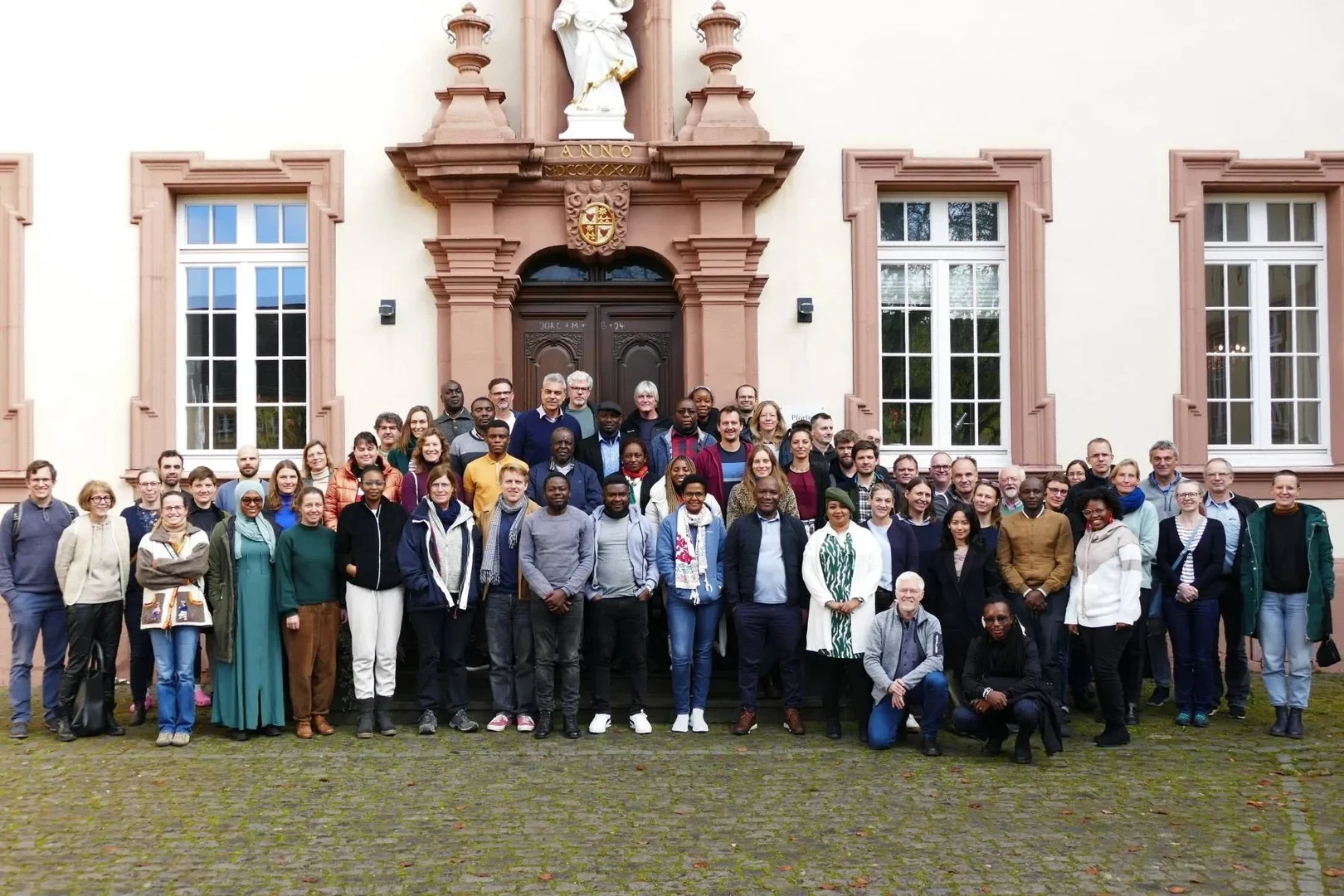
Against the backdrop of rapidly advancing globalization and the increasingly noticeable consequences of global climate change, the CRC/Transregio 228 ‘Future Rural Africa: Future-making and social-ecological transformation’ is examining how future-oriented processes of agricultural intensification, infrastructure development (such as roads, dams, geothermal power plants) and the expansion of nature conservation zones in rural Africa are being negotiated. In the face of rapid socio-ecological change, how do the seemingly opposing but often interwoven processes of increased land use and the expansion of nature reserves affect food security, social systems and commodity chains?
The researchers, who represent fields including geography, ethnology, the agricultural sciences, sociology, economics, virology and botany, are analyzing how different perceptions about the future are impacting on changes in land use. They are also looking particularly at unforeseeable developments such as droughts, violent conflicts and political crises, which are still posing major problems for planning capability across broad swathes of rural Africa. In geographical terms, their focus lies on parts of eastern and southern Africa.
The DFG will now be continuing to fund CRC-TRR 228, providing around €13.1 million in total over the next four years. Professor Britta Klagge from the Department of Geography at the University of Bonn will be taking over as the project’s speaker in its third funding period, during which it will focus particularly on the role played by financing processes and financing structures as overarching analytical perspectives. This is geared toward gaining a better understanding of the local agency wielded by various actors and of the determining factors for nature conservation, agricultural intensification and infrastructure development. There is also an exhibition project run in collaboration with the Futurium museum in Berlin and African artists, featuring exhibitions in Berlin and at various venues across Africa.
Also involved in the collaborative project are the University of Cologne, the Bonn International Centre for Conflict Studies (BICC), the German Institute of Development and Sustainability (IDOS), the Charité at Humboldt-Universität zu Berlin, the University of Potsdam and the University of the Western Cape in South Africa as well as numerous other partners in eastern and southern Africa.
The first two funding periods have already produced numerous publications (see below).