

Land Surface Dynamics
Land Surface Dynamics brings together research at the Department of Geography that investigates current and future changes in land surfaces and Earth system processes. This page introduces the research focus area, highlights the participating research groups, presents ongoing and completed projects, and provides contact information for further exchange and collaboration.
What is studied in the research focus area Land Surface Dynamics?
The research focus on Land Surface Dynamics examines the characteristics of interactions between landforms, Earth surface processes, water systems, geological and biological cycles, landuse, and climate. We study and model past, recent, and future land surface dynamics in changing spatiotemporal patterns and Earth system responses to climatic and land cover/use change forcing. Examples of key research questions investigated across different spatial and temporal scales include how landscapes evolve over time under the changing climate; how water and sediment fluxes can be modelled in relation to management of water resources; or how climate change affects the main cycles of terrestrial ecosystems (i.e., carbon and water cycles, and energy balance).
This interdisciplinary research focus comprises a variety of scientific methods and techniques such as multiscale field experiments and measurements, quantitative lab analysis, air-/space-borne remote sensing, and statistical as well as numerical modelling.
Under this focus, our research examines, inter alia, dynamics of landslides and mountain permafrost, remote sensing vegetation stress detection and reactions using radiative transfer models, land surface modelling including biogeochemical cycles, watershed modelling, sediment mobilisation, evolution of alpine ecosystem, and more. Other teams are investigating geomorphological and anthropogenic evidence from recent, historic and pre-historic floods to droughts for their quantitative reconstruction. The research focus Land Surface Dynamics contributes to the Transdisciplinary Research Areas Modelling (TRA1) and Sustainable Futures (TRA6), Center for Earth System Observation and Computational Analysis (CESOC), but also to the PhenoRob Cluster of Excellence of the University of Bonn.
Involved research groups
- Georisk Research using Remote Sensing Methods (Prof. Dr. Christian Geiß)
- Remote Sensing and GIS (Prof. Dr. Zbynek Malenovsky)
- Geomorphology and Environmental Systems (Prof. Dr. Lothar Schrott)
- Hydrology (Prof. Dr. Julian Klaus)
- Geomorphology and Palaeohydrology (Prof. Dr. Jürgen Herget)
- Climatology and Landscape Ecology (Prof. Dr. Jörg Löffler)

Current projects on Land Surface Dynamics
- Spaceborne Earth Observation Applications for Emergency Response and Disaster Risk Reduction 2 [SPEAR II] Prof. Dr. Klaus Greve, Prof. Dr. Christian Geiß; DLR u. UN-SPIDER, 7/2024 – 6/2029; Partner*innen: DLR, UN-SPIDER, UNOOSA
- ESERO European Space Education Resource Office Germany Prof. Dr. Zbynek Malenovsky; ESA, 2023 – 2025; Partner*innen: Ruhr-Universität Bochum
- 3DforestSIF Prof. Dr. Zbynek Malenovsky; Forschungszentrum Jülich und DLR, 3/2024 – 2/2027; Partner*innen: Forschungszentrum Jülich
- WetlandHealth4UNgoals PD Dr. Michael Schmidt; United Nation University - Institute for Environment and Human Security (UNU-EHS) Bonn, 8/2024 – 7/2027; Partner*innen: United Nation University - Institute for Environment and Human Security (UNU-EHS) Bonn
- CloudComputing4EO: PD Dr. Michael Schmidt; Urbetho CD GmbH, 6/2024 – 5/2025; Partner*innen: Urbetho CD GmbH
- Predicting transport processes in streams Dr. Clarissa Glaser; Klaus-Tschira-Stiftung, 4/2025 – 4/2028
- Identification of sources of surface water and suspended sediment using mixing models and spectrophotometric monitoring (Dr. Fahimeh Mirchooli)
- Fire-Stream: Insights into Wildfire Effects on Streamflow Generation and Water Quality: A Comparative Analysis Pre- and Post-Fire using Tracer Data Prof. Dr. Julian Klaus; VolkswagenStiftung, 5/2024 – 5/2027; Partner*innen: Prof. Dr. Catalina Segura von der Oregon State University
- Response of Soil and Rhizosphere Microbial Communities to Long-Term Variability of Nearground Temperature and Soil Moisture in a Topography-Shaped Arctic-Alpine System Prof. Dr. Jörg Löffler; DFG, 2022 – 2025; Partner*innen: Prof. Dr. Claudia Knief
- Das Hydrologische Gedächtnis des Rheins Dr. Thomas Roggenkamp; Bundesanstalt für Gewässerkunde, 01/2022 – 12/2025
- Sand dunes and Holocene environmental change in the European Arctic [ArcDune] Melanie Stammler; Deep-time Digital Earth (DDE) program, 8/2023 – 7/2026; Partner*innen: Daniel Hölbling (Paris Lodron University Salzburg), Thomas Stevens (Uppsala University)
- Investigating the Hydrological Significance of Rock Glaciers in the Northern Tien Shan: Prof. Dr. Lothar Schrott, Prof. Dr. Tobias Bolch; Collaborative Research Grants with the University of St Andrews, Seit 10/2022; Partner*innen: Prof. Tobias Bolch (TU Graz), Dr Richard Streeter (University of St Andrews), Kazakh Institute of Geography and Water Security
Contact
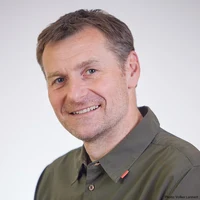
Prof. Dr. Zbynek Malenovsky
1.029 (332)
Meckenheimer Allee 166
53115 Bonn
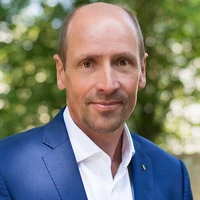
Prof. Dr. Lothar Schrott
0.028 (153)
Meckenheimer Allee 166
53115 Bonn