

The number of individuals exposed to flooding is increasing and is projected to increase in the future. Catastrophic events like the July 2021 flood in Germany's Ahr Valley (Rhineland-Palatinate) illustrate the severe and often long-lasting mental health impacts such disasters can cause. However, research on the psychological consequences of extreme flooding remains less developed than studies on physical damage. Gaining a clearer understanding of individual mental burden following such events is essential for tailoring recovery efforts to address mental health needs effectively. This study investigates how various factors—including flood characteristics, circumstances of the recovery process, personal characteristics, perceptions, and sociodemographic characteristics—affect self-reported mental burden. Using binary logistic regression, we analyzed responses from 277 individuals affected by the July 2021 flood in the Ahrweiler district. Results show that even 18 months after the event, 42.6% of respondents continued to experience high to very high levels of mental burden. Interestingly, the analysis found that sociodemographic variables—particularly, health status—and personal characteristics and perceptions (e.g., persistent mental preoccupation) had a greater impact on mental burden than the characteristics of the flood or the reconstruction process. Considering the strong impact of health status, health monitoring of affected populations may help identify individuals at greater risk, ensuring timely and targeted mental health interventions. These findings underscore the importance of incorporating long-term psychosocial support into disaster recovery strategies.
New Publication by Klör et al. 2025 New Publication by Klör et al. 2025
"Factors Influencing Mental Burden Caused by Flooding: Insights from the 2021 Flood in the Ahr Valley (Germany)" by Klör et al. 2025, published in Journal of Flood Risk Management 18, 4. S. e70116. doi: https://doi.org/10.1111/jfr3.70116
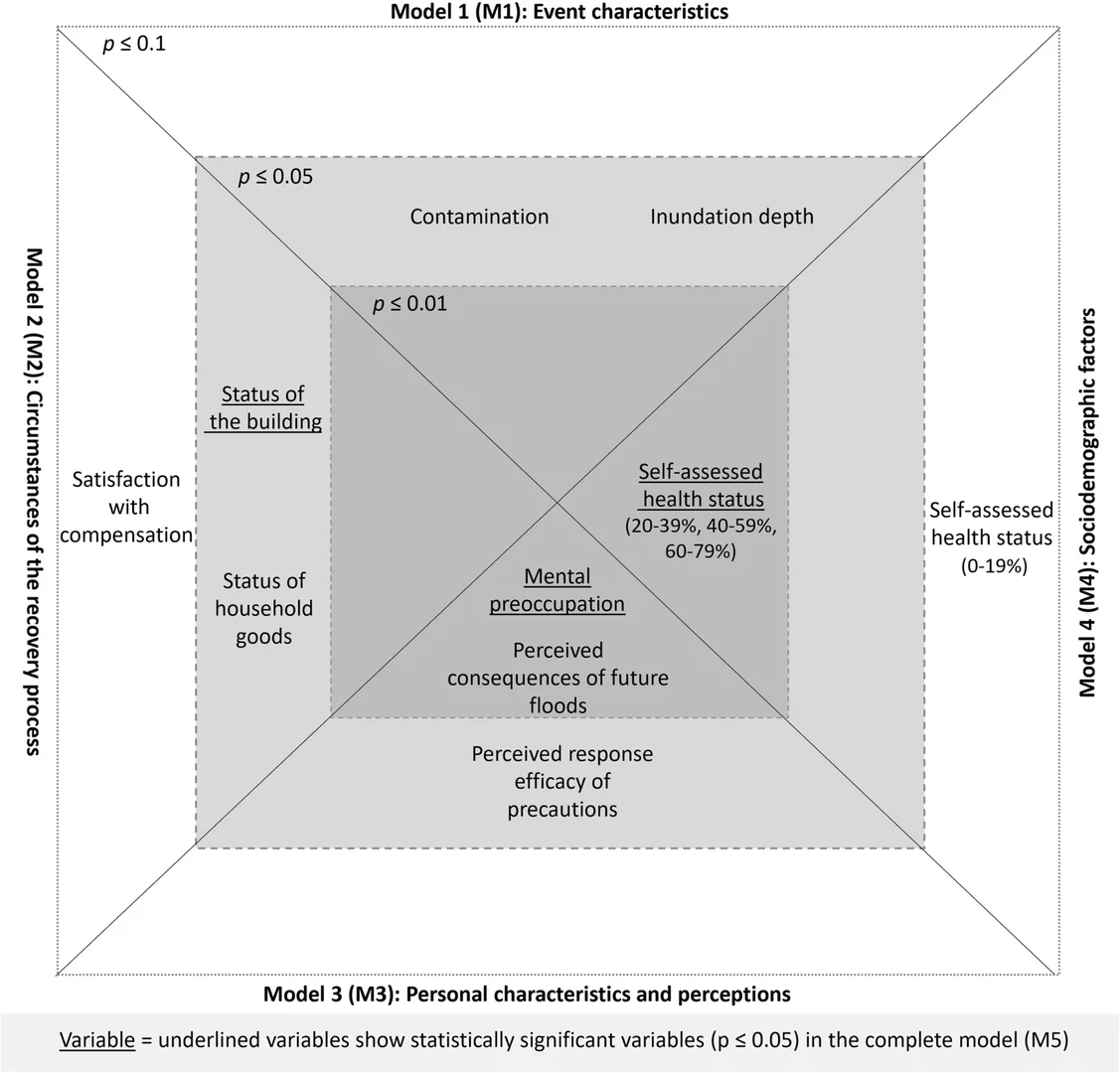
Fig. 3: Summary of the key findings showing all significant variables from models M1 to M5, the placement to the individual significance levels refers to the results from M1 to M4.
© Klör et al. 2025
Alle Bilder in Originalgröße herunterladen
Der Abdruck im Zusammenhang mit der Nachricht ist kostenlos, dabei ist der angegebene Bildautor zu nennen.
For more publications of the Geomorphology and Environmental Research Group please go to our research section.