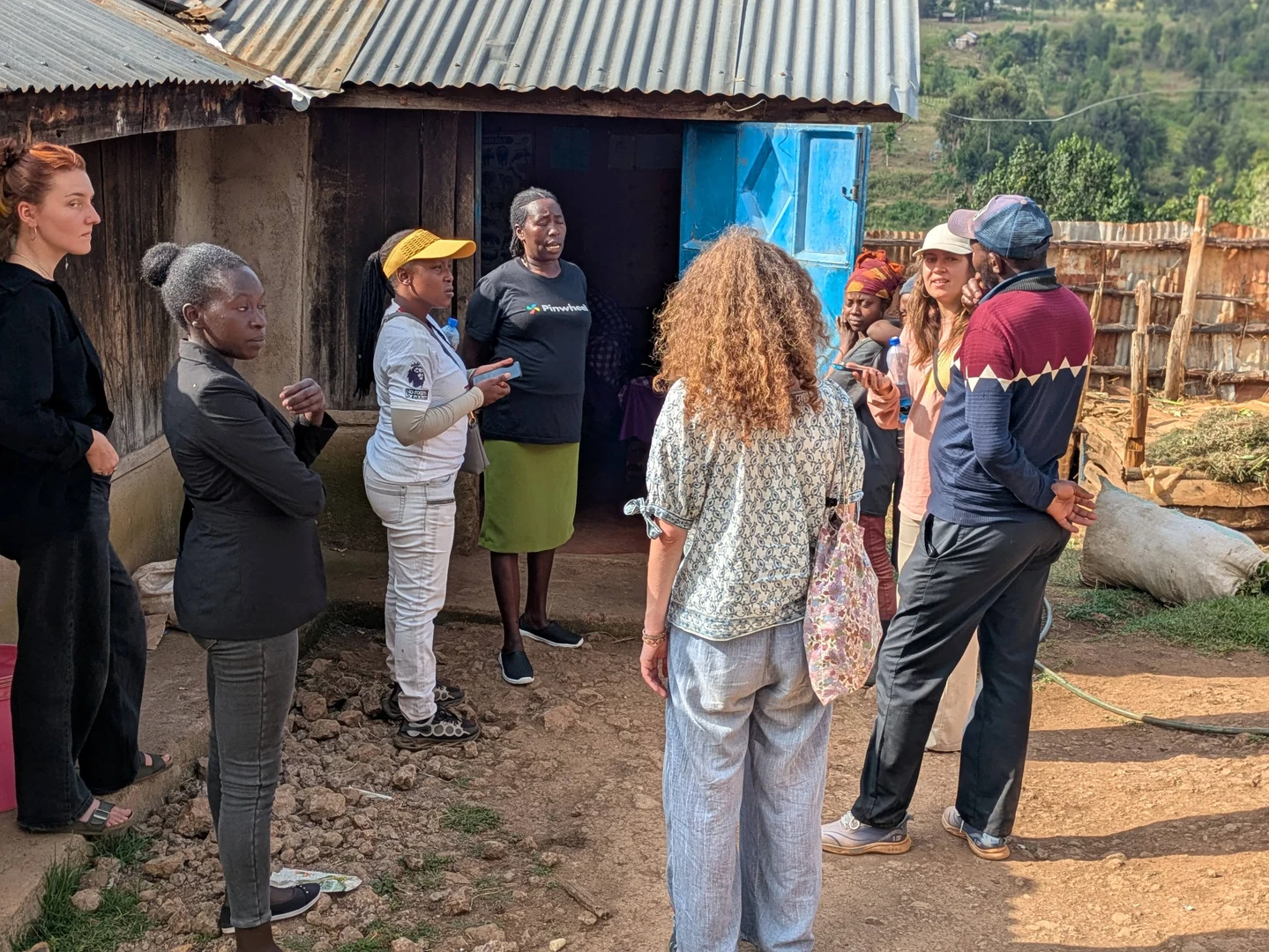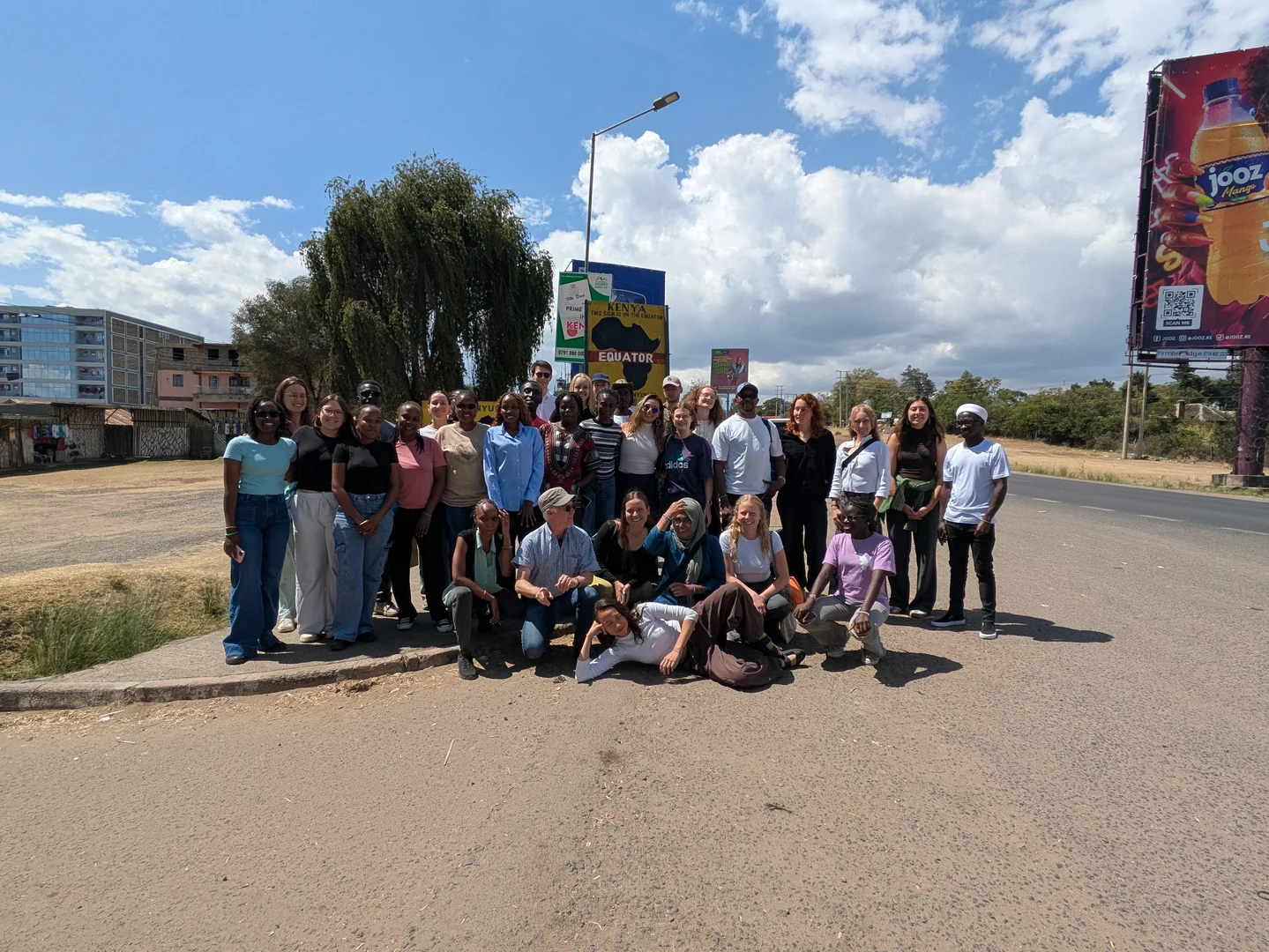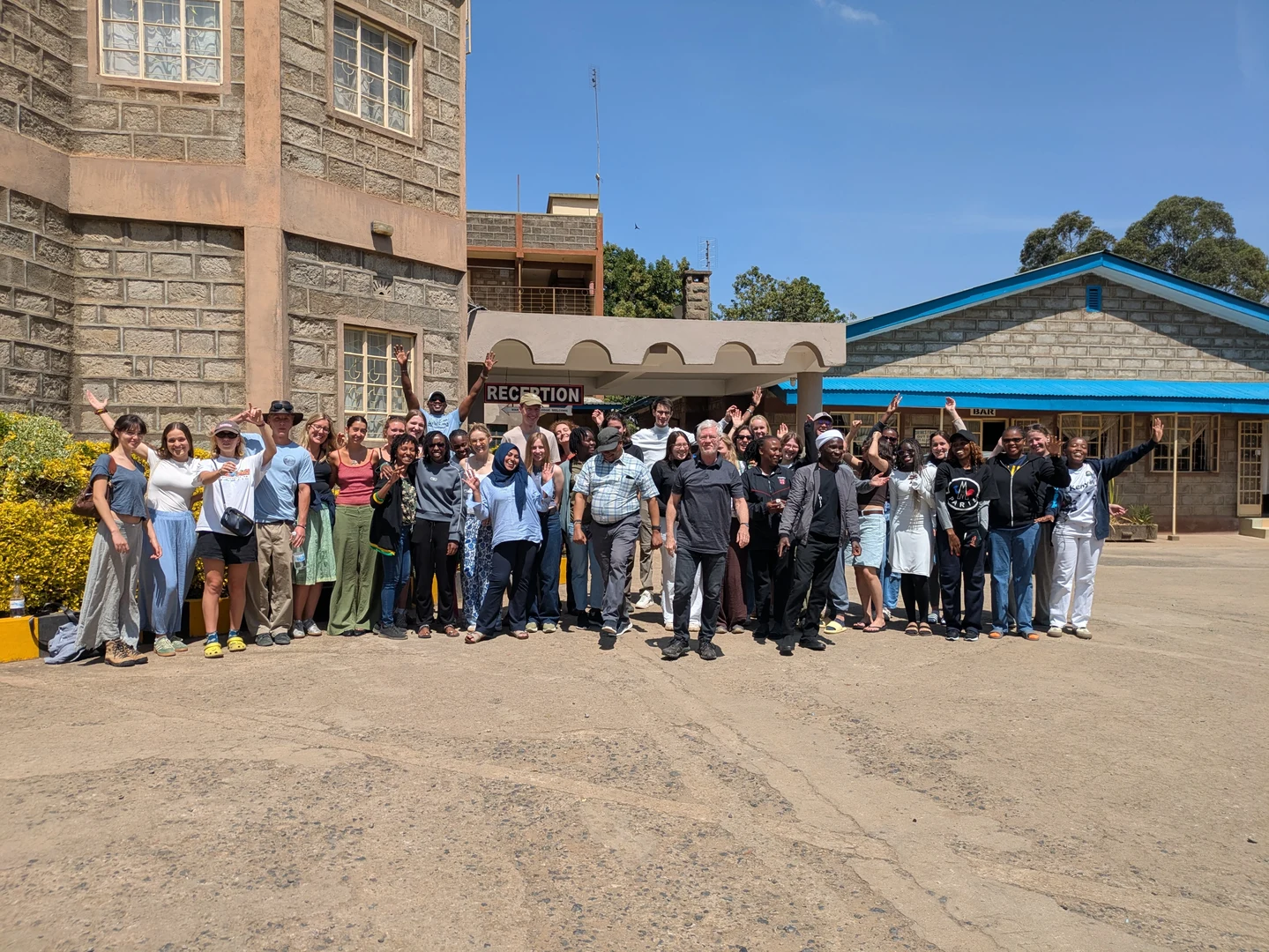
In the end, everyone agreed: the field school in Kenya was incredibly productive, but also incredibly demanding. For two weeks in August 2026, 16 Master’s students from Bonn and 14 students from Nairobi worked together in six mixed groups to investigate the current dynamics of land markets at the foot of Mount Kenya. The groups addressed various topics, such as the relationship between water availability and land prices, the role of land-buying agencies, land acquisitions by urban and foreign investors, the spatial transformation of Nanyuki town, and the impact of these processes on the local smallholder farming communities. These transformative processes can be described, on the one hand, as dynamic economic development, and, on the other, as the sell-off and commercialisation of land. They become particularly problematic when they reach the limits of water availability and threaten local livelihoods.
Already during the preparatory phase, the students from Bonn and Nairobi met in hybrid sessions to work on the conceptual outline for their respective projects, drawing from political ecology and water governance frameworks. The stay in Kenya began with a visit to the Ministry of Water in Nairobi and field trips to Lake Naivasha and the arid lands north of Mount Kenya. During their time in the field, students were accommodated in small groups in their research regions, where they organised their research work independently. This was not always easy, given the unfamiliar surroundings and the long distances involved. The working groups were regularly visited and advised by Prof. Detlef Müller-Mahn (GIUB) and Dr. Eric Kioko (Kenyatta University). On the final day, all groups presented their findings at the regional research centre CETRAD in Nanyuki. The seminar was partly organized in collaboration with the Department of Geography of St. Andrews University.
Besides practical experiences in research methods, the participants also had a lot of fun. One group stayed at a lodge with free-moving ostriches and peacocks, who curiously observed the foreign visitors. Another group made friends with local land agents and brokers, who even came to attend the final presentation of the research findings. In general, the findings proved that the topic of land markets is central to the future of regional development in this part of Kenya. This topic will be further explored by the Collaborative Research Centre (CRC-TRR 228) “Future Rural Africa”, which facilitated the organisation of the field school and the collaboration between the Department of Geography in Bonn, Kenyatta University, and CETRAD Nanyuki.