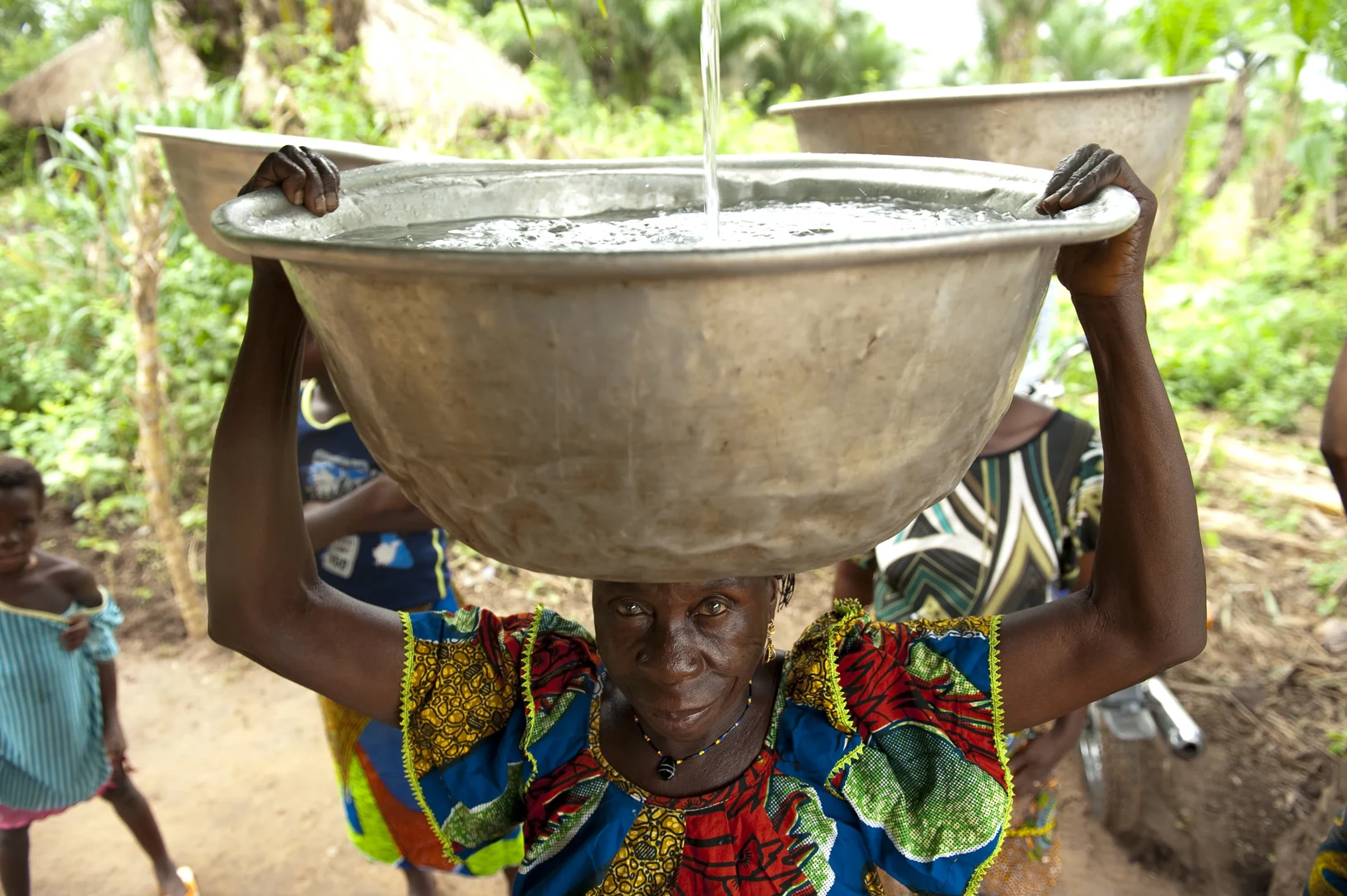
The story is not a new one: in many countries, women bear the brunt of water insecurity. They are the ones hauling heavy water jugs over kilometres, often exposed to harassment or sextortion along the way. They keep households and sometimes entire villages functioning when water is scarce – especially in communities with large male out-migration. In many regions, this has increasingly feminised water management and agricultural labour, making women the primary managers of household survival and community resilience. Yet despite this responsibility, women’s influence over water allocation remains limited - decisions about drinking water and irrigation flows are often still dominated by men. Nevertheless, gender-water dynamics are changing. These changes offer critical entry points to improve water access and use for both women and men, and to advance women’s empowerment. Two key questions are at the centre of our debate:
- How does water access affect men and women differently?
Panellists will dive deeper into the lived reality of women in different settings to better understand how water flows are not only physical and shaped by infrastructure, but also subject to power relations and inclusion or exclusion. - Which opportunities for inclusive water governance emerge, and which approaches have proven useful?
Panellists will exchange on best practices for gender-balanced water governance and explore the role of infrastructure design, labour division, migration patterns, land tenure systems, climate change, sociocultural factors and governance arrangements.
We are happy to explore these questions with four experts:
- Abigail Erikson, Acting Head of UN Women, Bonn; Chief, UN Trust Fund to End Violence Against Women and Girls
- Ivan Zupan, Head of Programmes in Bangladesh, Kenya, Mexico, and Uganda, Water Integrity Network (WIN)
- Hind Ftouhi, Lecturer and researcher at the Institut National d’Aménagement et d'Urbanisme (INAU), Morocco
- Anindita Sarkar, Professor at the University of Delhi, India, and Senior Researcher at the Center for Development Research (ZEF), University of Bonn, German
Following expert input on the two key questions, the floor will open for discussion. The event will be moderated by Annabelle Houdret, German Institute of Development and Sustainability (IDOS).